

SOMETHING ABOUT MARY
“I WILL PUT ENMITY BETWEEN YOU AND THE WOMAN
AND BETWEEN YOUR OFFSPRING AND HERS;
HE WILL STRIKE YOUR HEAD, AND YOU WILL STRIKE HIS HEEL.”
GENESIS 3:15
SOMETHING
ABOUT
MARY
“I WILL PUT ENMITY BETWEEN
YOU AND THE WOMAN
AND BETWEEN YOUR OFFSPRING AND HERS;
HE WILL STRIKE YOUR HEAD,
AND YOU WILL STRIKE HIS HEEL.”
GENESIS 3:15
SOMETHING
ABOUT MARY
“I WILL PUT ENMITY
BETWEEN YOU AND THE WOMAN,
AND BETWEEN YOUR
OFFSPRING AND HERS;
HE WILL STRIKE YOUR
HEAD, AND YOU WILL
STRIKE HIS HEEL.”
GENESIS 3:15
IS IT BIBLICAL?
The Rosary is a scripture-based meditation and prayer that centres on the life of Our Lord Jesus, and Mary His mother who was the most faithful witness of Jesus.
These are the main parts in the Rosary:
Apostles Creed
The Lord’s Prayer
The Hail Mary
Glory Be
Fatima Prayer
Let’s break it down…
The Apostles’ Creed
“Symbol of faith”, expresses the the teachings of the Apostles, with its earliest form dating to A.D 125 up to today’s development of other foundational statements of faith: More on the Apostles Creed
The Lord’s Prayer
The Our Father prayer which Jesus Himself taught His disciples to pray.
(Matt. 6:9-13; Luke 11:2-4)
The Hail Mary
“Hail Mary, full of grace, the Lord is with thee…”
- In Luke 1:28, the word “full of grace” used here with reference to Mary is kecharitōménē – its root word is the Greek verb “to give grace” (charitóō) in past perfect tense, which means the action of grace has already happened and accomplished – a completed state of grace.
“Blessed art thou among women, and blessed is the fruit of thy womb, Jesus.”
- Luke 1:42 when Mary visits Elizabeth who exclaimed: “Blessed are you among women, and blessed is the fruit of your womb.”
“Holy Mary, Mother of God, pray for us sinners, now and at the hour of our death.”
This last part is a petition included in the Council of Trent, 1566 – it’s a recognition of most heavenly gifts and grace bestowed on the most holy Virgin Mary, just as she took care of our Lord on earth, we too implore her help and assistance on the journey to heaven.
Glory Be (Doxology)
“Doxology” in Greek is an expression of glory and praise. This too acts as a reminder in our hearts that the glory of God in the Blessed Trinity is the purpose and end of all our prayers and actions. You can see a similar closing in prayer with praise by St. Paul in his epistles.
Fatima Prayer
“O my Jesus, forgive us our sins, save us from the fires of hell. Lead all souls to Heaven, especially those in most need of thy mercy.”
This is a collection of prayers that came from the Marian apparitions at Fátima, Portugal in 1917 to the three children as a call for forgiveness and mercy.
IS IT BIBLICAL?
What forms the Rosary?
The Rosary is a scripture-based meditation and prayer that centres on the life of Our Lord Jesus, and Mary His mother who was the most faithful witness of Jesus.
These are the main parts in the Rosary:
Apostles Creed
The Lord’s Prayer
The Hail Mary
Glory Be
Fatima Prayer
Let’s break it down…
The Apostles’ Creed
“Symbol of faith”, expresses the the teachings of the Apostles, with its earliest form dating to A.D 125 up to today’s development of other foundational statements of faith: More on the Apostles Creed
The Lord’s Prayer
The Our Father prayer which Jesus Himself taught His disciples to pray.
(Matt. 6:9-13; Luke 11:2-4)
The Hail Mary
“Hail Mary, full of grace, the Lord is with thee…”
- In Luke 1:28, the word “full of grace” used here with reference to Mary is kecharitōménē – its root word is the Greek verb “to give grace” (charitóō) in past perfect tense, which means the action of grace has already happened and accomplished – a completed state of grace.
“Blessed art thou among women, and blessed is the fruit of thy womb, Jesus.”
- Luke 1:42 when Mary visits Elizabeth who exclaimed: “Blessed are you among women, and blessed is the fruit of your womb.”
“Holy Mary, Mother of God, pray for us sinners, now and at the hour of our death.”
This last part is a petition included in the Council of Trent, 1566 – it’s a recognition of most heavenly gifts and grace bestowed on the most holy Virgin Mary, just as she took care of our Lord on earth, we too implore her help and assistance on the journey to heaven.
Glory Be (Doxology)
“Doxology” in Greek is an expression of glory and praise. This too acts as a reminder in our hearts that the glory of God in the Blessed Trinity is the purpose and end of all our prayers and actions. You can see a similar closing in prayer with praise by St. Paul in his epistles.
Fatima Prayer
“O my Jesus, forgive us our sins, save us from the fires of hell. Lead all souls to Heaven, especially those in most need of thy mercy.”
This is a collection of prayers that came from the Marian apparitions at Fátima, Portugal in 1917 to the three children as a call for forgiveness and mercy.
IS IT
BIBLICAL?
What forms the Rosary?
The Rosary is a scripture-based meditation and prayer that centres on the life of Our Lord Jesus, and Mary His mother who was the most faithful witness of Jesus.
These are the main parts in the Rosary:
Apostles Creed
The Lord’s Prayer
The Hail Mary
Glory Be
Fatima Prayer
Let’s break it down…
The Apostles’ Creed
“Symbol of faith”, expresses the the teachings of the Apostles, with its earliest form dating to A.D 125 up to today’s development of other foundational statements of faith: More on the Apostles Creed
The Lord’s Prayer
The Our Father prayer which Jesus Himself taught His disciples to pray.
(Matt. 6:9-13; Luke 11:2-4)
The Hail Mary
“Hail Mary, full of grace, the Lord is with thee…”
- In Luke 1:28, the word “full of grace” used here with reference to Mary is kecharitōménē – its root word is the Greek verb “to give grace” (charitóō) in past perfect tense, which means the action of grace has already happened and accomplished – a completed state of grace.
“Blessed art thou among women, and blessed is the fruit of thy womb, Jesus.”
- Luke 1:42 when Mary visits Elizabeth who exclaimed: “Blessed are you among women, and blessed is the fruit of your womb.”
“Holy Mary, Mother of God, pray for us sinners, now and at the hour of our death.”
This last part is a petition included in the Council of Trent, 1566 – it’s a recognition of most heavenly gifts and grace bestowed on the most holy Virgin Mary, just as she took care of our Lord on earth, we too implore her help and assistance on the journey to heaven.
Glory Be (Doxology)
“Doxology” in Greek is an expression of glory and praise. This too acts as a reminder in our hearts that the glory of God in the Blessed Trinity is the purpose and end of all our prayers and actions. You can see a similar closing in prayer with praise by St. Paul in his epistles.
Fatima Prayer
“O my Jesus, forgive us our sins, save us from the fires of hell. Lead all souls to Heaven, especially those in most need of thy mercy.”
This is a collection of prayers that came from the Marian apparitions at Fátima, Portugal in 1917 to the three children as a call for forgiveness and mercy.
FIRST CHRISTIANS
If we look to the earliest historical Christians especially in times of persecution, we find the oldest known prayer dedicated to the Blessed Virgin Mary was the Sub tuum præsidium ‘under your protection’ from the fragment of Egyptian Papyrus:
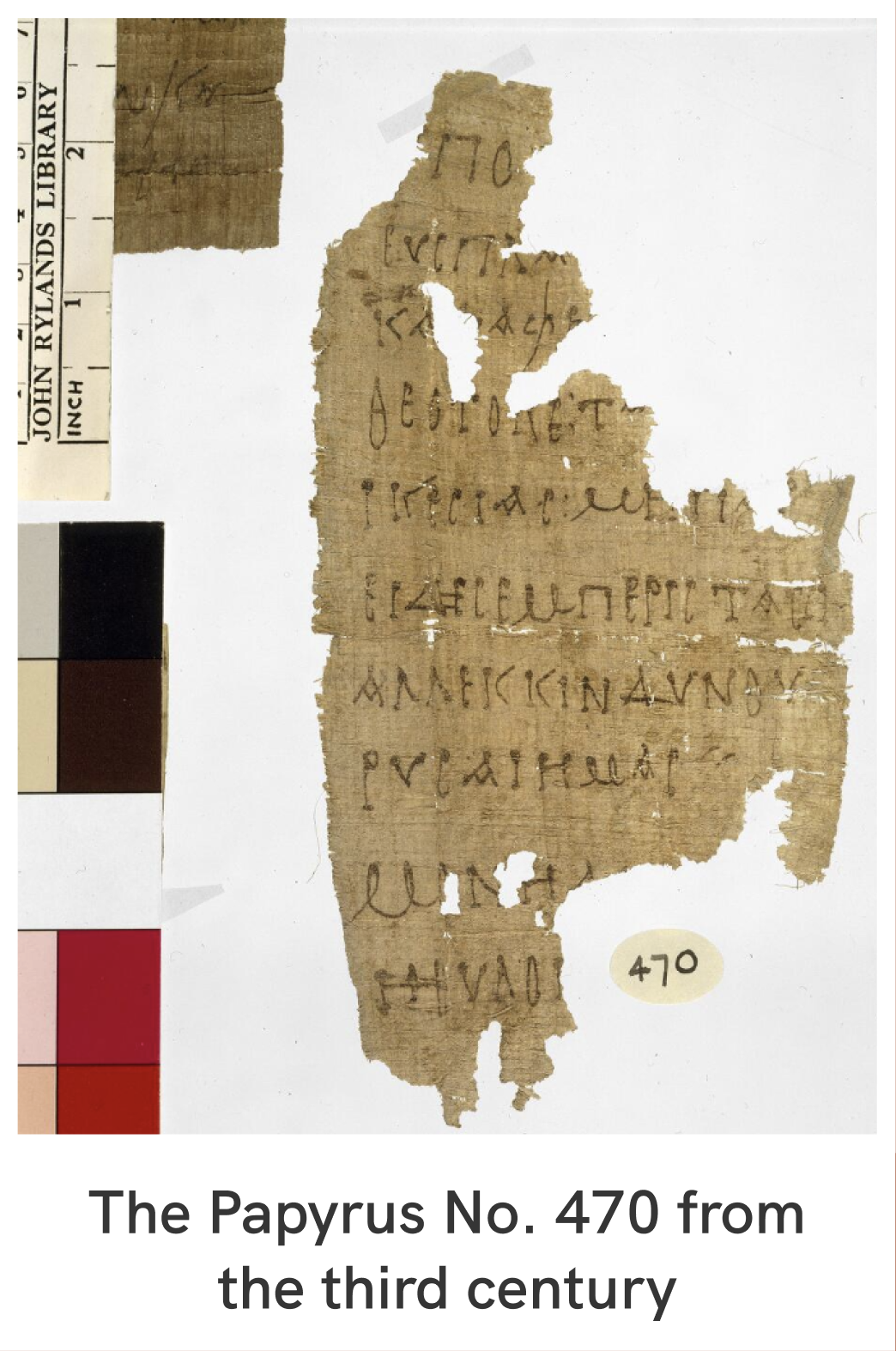
“Beneath thy compassion,We take refuge, O Theotokos [God-bearer]:do not despise our petitions in time of trouble:but rescue us from dangers,only pure one, only blessed one.”
A request to Mary as the Mother of God to intercede for our us. We also see inscriptions in the catacombs.
There is also other historical artifacts that show the first Christians seeking for intercession from the Saints and those who have gone before them.
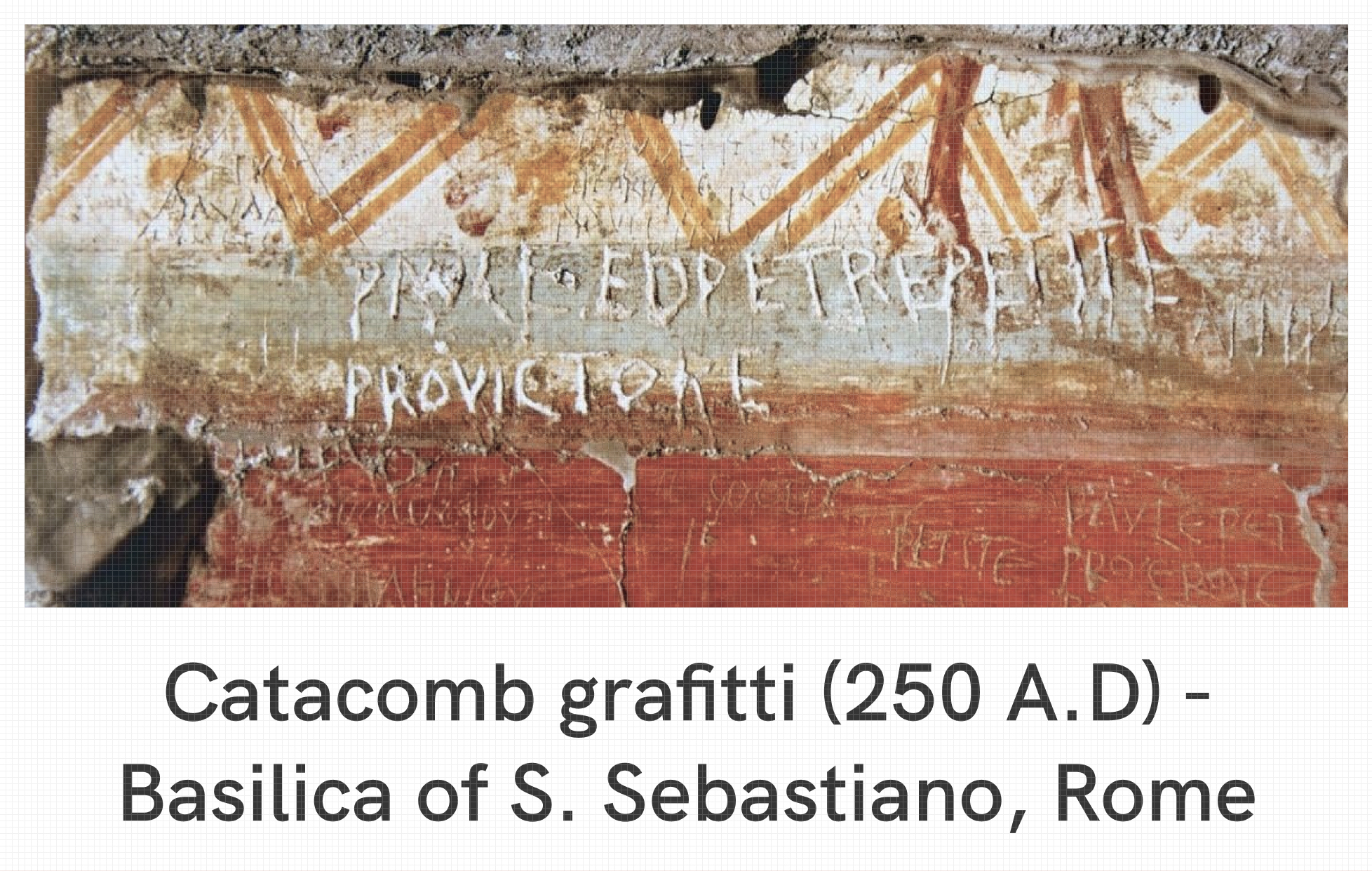
The phrase “Peter and Paul come to rescue Primus the sinner!” is an example of ancient Christian graffiti found in the Roman catacombs, dating to around 250 AD. It is a prayer asking the apostles Saints Peter and Paul to intervene for a person named Primus, who is referred to as a “sinner”.
The Early Church Fathers
Origen
“But not the high priest [Christ] alone prays for
those who pray sincerely, but also the angels . . . as also the souls of the saints who have already fallen asleep” (Prayer 11 [A.D. 233]).
Cyprian of Carthage
“Let us remember one another in concord and unanimity. Let us on both sides [of death] always pray for one another. Let us relieve burdens and afflictions by mutual love, that if one of us, by the swiftness of divine condescension, shall go hence first, our love may continue in the presence of the Lord, and our prayers for our brethren and sisters not cease in the presence of the Father’s mercy” (Letters 56[60]:5 [A.D. 253]).
Hermas
“But you, [Hermas,] having been strengthened by the holy angel [you saw], and having obtained from him such intercession, and not being slothful, why do not you ask of the Lord understanding, and receive it from him?’” (The Shepherd 3:5:4 [1st-2nd century]).
FIRST CHRISTIANS
If we look to the earliest historical Christians especially in times of persecution, we find the oldest known prayer dedicated to the Blessed Virgin Mary was the Sub tuum præsidium ‘under your protection’ from the fragment of Egyptian Papyrus:
“Beneath thy compassion,We take refuge, O Theotokos [God-bearer]:do not despise our petitions in time of trouble:but rescue us from dangers,only pure one, only blessed one.”
A request to Mary as the Mother of God to intercede for our us. We also see inscriptions in the catacombs.
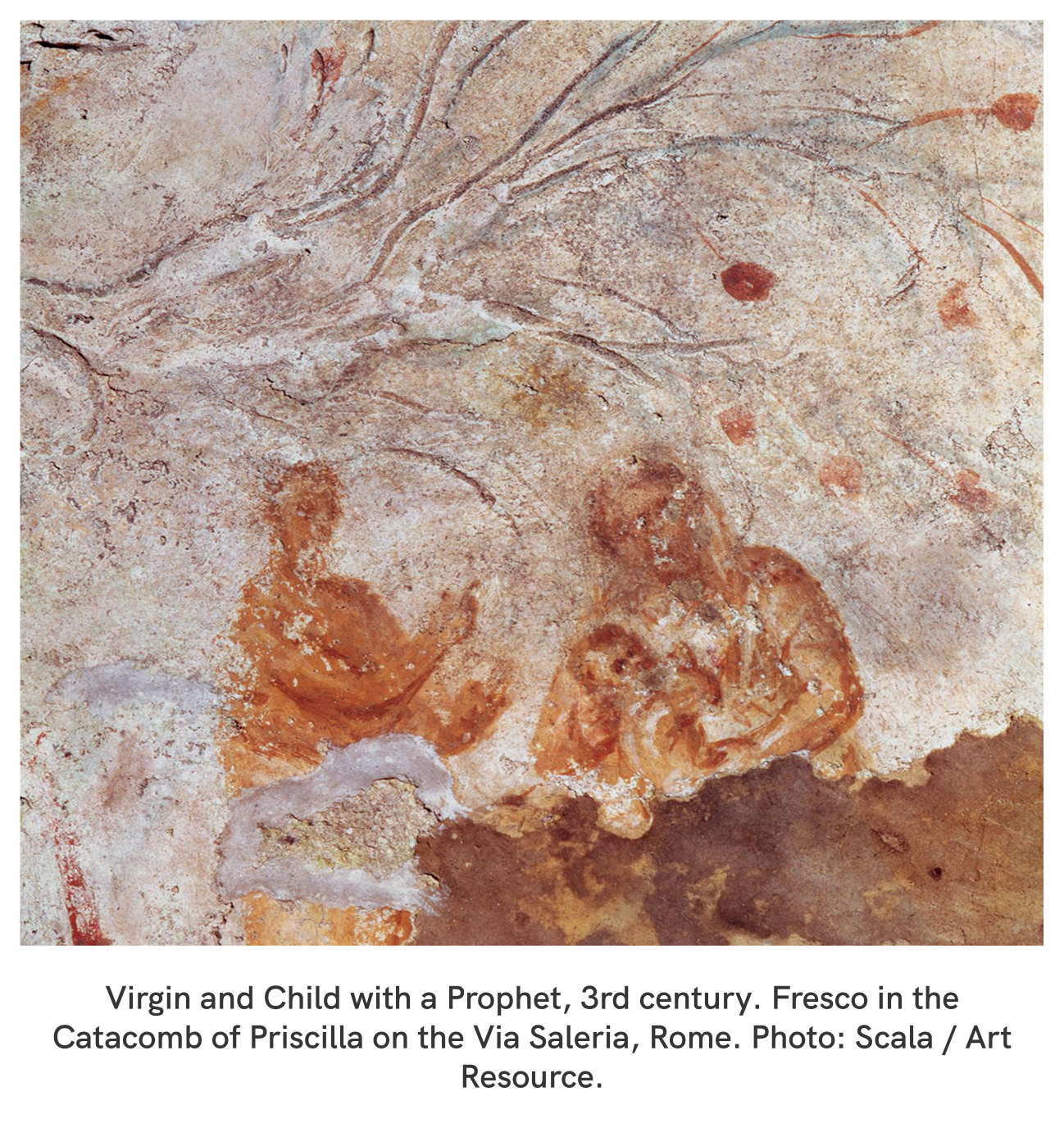
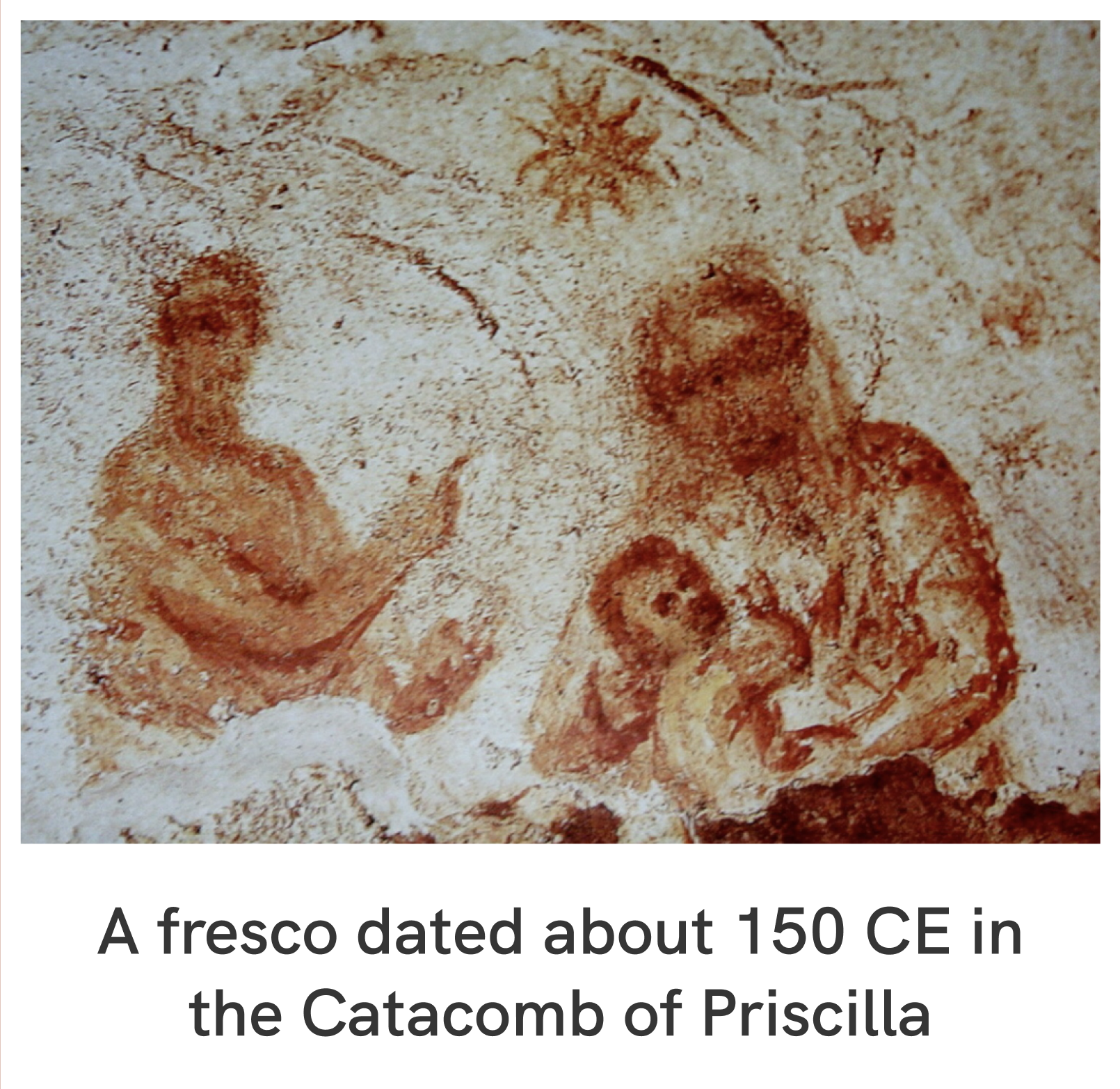
Mary breastfeeding the Christ Child – the earliest known Madonna and Child image in Christian art. A male figure interpreted as the Prophet Balaam pointing toward a star above (Numbers 24:17: “A star shall come forth out of Jacob”) or the Prophet Isaiah foretelling the Virgin birth (Isaiah 7:14).
There is also other historical artifacts that show the first Christians seeking for intercession from the Saints and those who have gone before them.
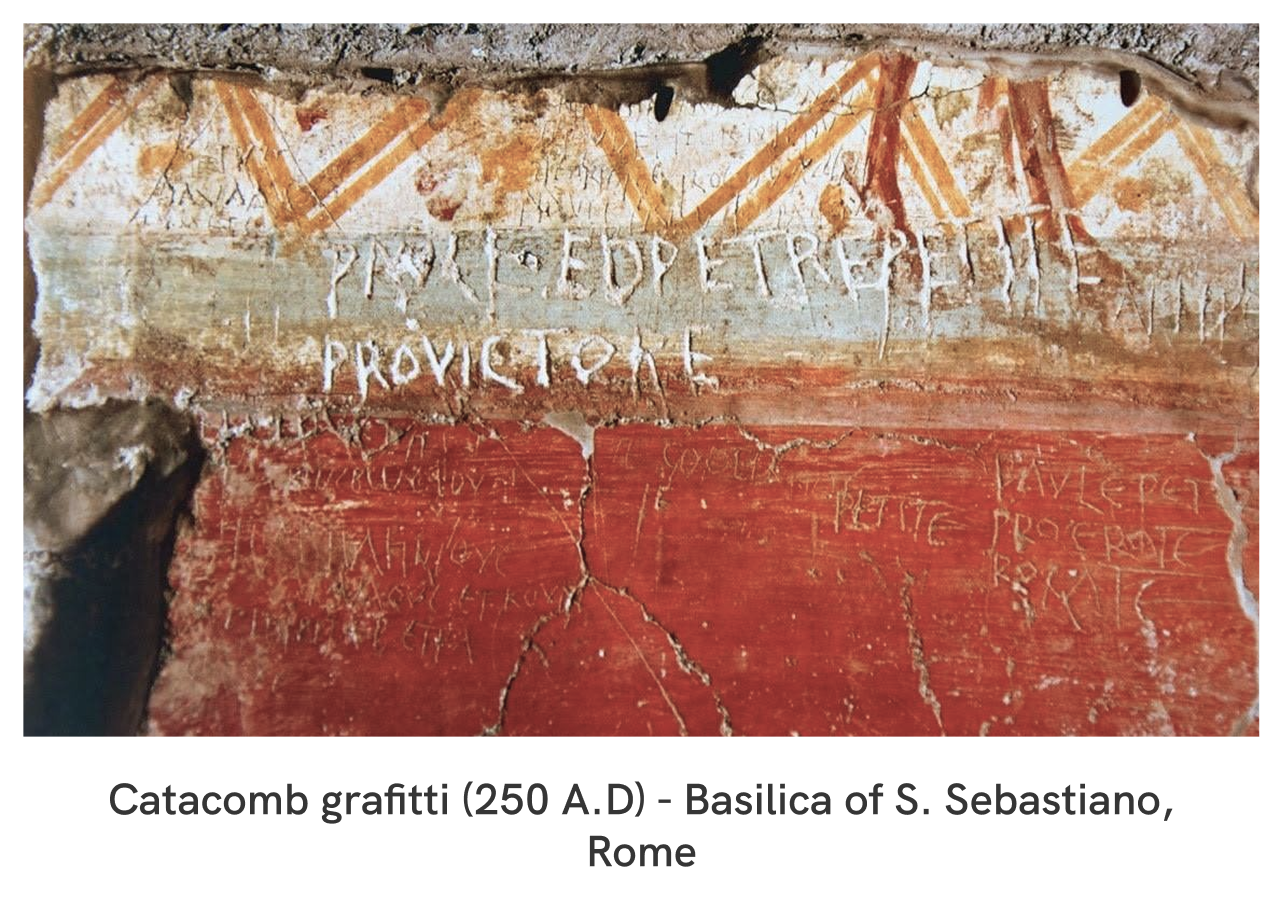
The phrase “Peter and Paul come to rescue Primus the sinner!” is an example of ancient Christian graffiti found in the Roman catacombs, dating to around 250 AD. It is a prayer asking the apostles Saints Peter and Paul to intervene for a person named Primus, who is referred to as a “sinner”.
The Early Church Fathers
Origen
“But not the high priest [Christ] alone prays for
those who pray sincerely, but also the angels . . . as also the souls of the saints who have already fallen asleep” (Prayer 11 [A.D. 233]).
Cyprian of Carthage
“Let us remember one another in concord and unanimity. Let us on both sides [of death] always pray for one another. Let us relieve burdens and afflictions by mutual love, that if one of us, by the swiftness of divine condescension, shall go hence first, our love may continue in the presence of the Lord, and our prayers for our brethren and sisters not cease in the presence of the Father’s mercy” (Letters 56[60]:5 [A.D. 253]).
Hermas
“But you, [Hermas,] having been strengthened by the holy angel [you saw], and having obtained from him such intercession, and not being slothful, why do not you ask of the Lord understanding, and receive it from him?’” (The Shepherd 3:5:4 [1st-2nd century]).
FIRST CHRISTIANS
If we look to the earliest historical Christians especially in times of persecution, we find the oldest known prayer dedicated to the Blessed Virgin Mary was the Sub tuum præsidium ‘under your protection’ from the fragment of Egyptian Papyrus:
“Beneath thy compassion,We take refuge, O Theotokos [God-bearer]:do not despise our petitions in time of trouble:but rescue us from dangers,only pure one, only blessed one.”
A request to Mary as the Mother of God to intercede for our us. We also see inscriptions in the catacombs.
Mary breastfeeding the Christ Child – the earliest known Madonna and Child image in Christian art. A male figure interpreted as the Prophet Balaam pointing toward a star above (Numbers 24:17: “A star shall come forth out of Jacob”) or the Prophet Isaiah foretelling the Virgin birth (Isaiah 7:14).
There is also other historical artifacts that show the first Christians seeking for intercession from the Saints and those who have gone before them.
The phrase “Peter and Paul come to rescue Primus the sinner!” is an example of ancient Christian graffiti found in the Roman catacombs, dating to around 250 AD. It is a prayer asking the apostles Saints Peter and Paul to intervene for a person named Primus, who is referred to as a “sinner”.
The Early Church Fathers
Origen
“But not the high priest [Christ] alone prays for
those who pray sincerely, but also the angels . . . as also the souls of the saints who have already fallen asleep” (Prayer 11 [A.D. 233]).
Cyprian of Carthage
“Let us remember one another in concord and unanimity. Let us on both sides [of death] always pray for one another. Let us relieve burdens and afflictions by mutual love, that if one of us, by the swiftness of divine condescension, shall go hence first, our love may continue in the presence of the Lord, and our prayers for our brethren and sisters not cease in the presence of the Father’s mercy” (Letters 56[60]:5 [A.D. 253]).
Hermas
“But you, [Hermas,] having been strengthened by the holy angel [you saw], and having obtained from him such intercession, and not being slothful, why do not you ask of the Lord understanding, and receive it from him?’” (The Shepherd 3:5:4 [1st-2nd century]).
ROSARY ORIGIN
From the Desert Caves: The First Prayer Cords
Long before the word “rosary” was spoken, the early Christian hermits of Egypt, Syria, and Palestine — known as the Desert Fathers — sought ways to keep their minds fixed on God amid solitude. They used knotted cords and strings of beads to count their repeated prayers, often short invocations like “Lord, have mercy.” These humble cords, simple tools of devotion, are the spiritual ancestors of today’s rosary.
A Psalter for the People
As centuries passed, monastic communities prayed all 150 Psalms daily — a devotion most laypeople could not follow since few could read. In response, a new practice emerged: ordinary Christians began to recite 150 Our Fathers, and later 150 Hail Marys, as a “Psalter for the laity.”
This became known as the “Psalter of the Blessed Virgin” or the “Angelic Psalter.” It allowed anyone, rich or poor, literate or not, to join the rhythm of the Church’s prayer life.
St. Dominic and the Rosary
In the 13th century, tradition says the Blessed Virgin Mary appeared to St. Dominic, founder of the Dominican Order, and gave him the rosary as a prayer to lead people back to God and fight false teachings. Although historians cannot confirm the vision, its message of prayer and reflection on Christ’s life became central to Dominican spirituality. The Dominicans helped spread the rosary throughout Europe, teaching its power for conversion and peace.
Meditation and Structure: The Work of Dominic of Prussia
Two centuries later, the devotion continued to evolve. Around the mid-1400s, a Carthusian monk…
…named Dominic of Prussia began adding short meditations on the life of Jesus and Mary to each Hail Mary. Instead of merely repeating words, he invited the faithful to contemplate Christ’s mysteries — His birth, passion, and resurrection — while praying. This innovation transformed the rosary into the meditative prayer we recognize today.
Modern Additions: The Luminous Mysteries
Over the centuries, the rosary became the prayer of homes, parishes, and saints — from St. Louis de Montfort to the children of Fatima. Then, in 2002, Pope John Paul II renewed its meaning for a modern world by adding a new set of reflections: the Luminous Mysteries, which focus on Christ’s public ministry — His Baptism, miracles, and institution of the Eucharist. He wrote in Rosarium Virginis Mariae: “The rosary, though clearly Marian in character, is at heart a Christocentric prayer.”
ROSARY ORIGIN
From the Desert Caves: The First Prayer Cords
Long before the word “rosary” was spoken, the early Christian hermits of Egypt, Syria, and Palestine — known as the Desert Fathers — sought ways to keep their minds fixed on God amid solitude. They used knotted cords and strings of beads to count their repeated prayers, often short invocations like “Lord, have mercy.” These humble cords, simple tools of devotion, are the spiritual ancestors of today’s rosary.
A Psalter for the People
As centuries passed, monastic communities prayed all 150 Psalms daily — a devotion most laypeople could not follow since few could read. In response, a new practice emerged: ordinary Christians began to recite 150 Our Fathers, and later 150 Hail Marys, as a “Psalter for the laity.”
This became known as the “Psalter of the Blessed Virgin” or the “Angelic Psalter.” It allowed anyone, rich or poor, literate or not, to join the rhythm of the Church’s prayer life.
St. Dominic and the Rosary
In the 13th century, tradition says the Blessed Virgin Mary appeared to St. Dominic, founder of the Dominican Order, and gave him the rosary as a prayer to lead people back to God and fight false teachings. Although historians cannot confirm the vision, its message of prayer and reflection on Christ’s life became central to Dominican spirituality. The Dominicans helped spread the rosary throughout Europe, teaching its power for conversion and peace.
Meditation and Structure: The Work of Dominic of Prussia
Two centuries later, the devotion continued to evolve. Around the mid-1400s, a Carthusian monk named Dominic of Prussia began adding short meditations on the life of Jesus and Mary to each Hail Mary. Instead of merely repeating words, he invited the faithful to contemplate Christ’s mysteries — His birth, passion, and resurrection — while praying. This innovation transformed the rosary into the meditative prayer we recognize today.
Modern Additions: The Luminous Mysteries
Over the centuries, the rosary became the prayer of homes, parishes, and saints — from St. Louis de Montfort to the children of Fatima. Then, in 2002, Pope John Paul II renewed its meaning for a modern world by adding a new set of reflections: the Luminous Mysteries, which focus on Christ’s public ministry — His Baptism, miracles, and institution of the Eucharist. He wrote in Rosarium Virginis Mariae: “The rosary, though clearly Marian in character, is at heart a Christocentric prayer.”
ROSARY ORIGIN
From the Desert Caves: The First Prayer Cords
Long before the word “rosary” was spoken, the early Christian hermits of Egypt, Syria, and Palestine — known as the Desert Fathers — sought ways to keep their minds fixed on God amid solitude. They used knotted cords and strings of beads to count their repeated prayers, often short invocations like “Lord, have mercy.” These humble cords, simple tools of devotion, are the spiritual ancestors of today’s rosary.
A Psalter for the People
As centuries passed, monastic communities prayed all 150 Psalms daily — a devotion most laypeople could not follow since few could read. In response, a new practice emerged: ordinary Christians began to recite 150 Our Fathers, and later 150 Hail Marys, as a “Psalter for the laity.”
This became known as the “Psalter of the Blessed Virgin” or the “Angelic Psalter.” It allowed anyone, rich or poor, literate or not, to join the rhythm of the Church’s prayer life.
St. Dominic and the Rosary
In the 13th century, tradition says the Blessed Virgin Mary appeared to St. Dominic, founder of the Dominican Order, and gave him the rosary as a prayer to lead people back to God and fight false teachings. Although historians cannot confirm the vision, its message of prayer and reflection on Christ’s life became central to Dominican spirituality. The Dominicans helped spread the rosary throughout Europe, teaching its power for conversion and peace.
Meditation and Structure: The Work of Dominic of Prussia
Two centuries later, the devotion continued to evolve. Around the mid-1400s, a Carthusian monk named Dominic of Prussia began adding short meditations on the life of Jesus and Mary to each Hail Mary. Instead of merely repeating words, he invited the faithful to contemplate Christ’s mysteries — His birth, passion, and resurrection — while praying. This innovation transformed the rosary into the meditative prayer we recognize today.
Modern Additions: The Luminous Mysteries
Over the centuries, the rosary became the prayer of homes, parishes, and saints — from St. Louis de Montfort to the children of Fatima. Then, in 2002, Pope John Paul II renewed its meaning for a modern world by adding a new set of reflections: the Luminous Mysteries, which focus on Christ’s public ministry — His Baptism, miracles, and institution of the Eucharist. He wrote in Rosarium Virginis Mariae: “The rosary, though clearly Marian in character, is at heart a Christocentric prayer.”